


CHCNAV i50 GNSS GEODETIC
The world’s fastest GNSS RTK rover
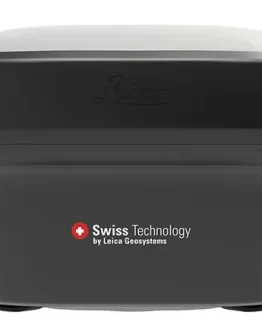
Introducing the world’s fastest and easiest-to-use GNSS RTK rover, the Leica GS18 T. Now you can measure any point faster and easier without the need to hold the pole vertical.
This latest innovation combines the GNSS and inertial measurement unit (IMU) being the first true tilt compensation solution that is immune to magnetic disturbances and is calibration-free. The GS18 T works directly out of the box.
Save up to 20 percent over conventional surveying practices due to the fact that no time is wasted by leveling the bubble. Focus on your surroundings and not the bubble to measure points that previously could not be measured. Avoid time-consuming auxiliary methods with true tilt compensated surveying. You will stake out more efficiently and conveniently than ever before with increased speed, safety, and comfort. Watching the bubble is simply no longer needed.
The GS18 T GNSS RTK rover is part of the Leica Geosystems self-learning GNSS series. It seamlessly combines with Leica Captivate field software and Leica Infinity office software, continuing the powerful and immersive Leica Captivate Experience.
Leica GS18 T antenna offers a world of possibilities like never before in the area of complex measurements and setups in difficult environments. It combines all the advantages of the Leica Viva GS16 antenna (including the first RTK+ smart managing technology) with the inertial measurement unit to be the first true tilt compensation solution immune to magnetic disturbances and it is calibration-free.
Contact Us for Best Price
Description
i50 GNSS
Affordable GNSS receiver for surveying and construction projects.
The i50 GNSS receiver delivers speed and accuracy in one easy-to-use GNSS solution for completing topographic surveys and construction projects. Combined with LandStar7 field software makes it even more efficient. The i50 GNSS receiver integrates positioning and communication technologies in a rugged unit designed to provide work flexibility. Can work with internet network mode or UHF mode, so survey work can run effectively in any conditions.
Specification
| Leica GS18 I GNSS RTK Rover | |||
|---|---|---|---|
| GNSS TECHNOLOGY | |||
| Self-learning GNSS | Leica RTKplus | Adaptive on-the-fly satellite selection | |
| SmartLink (worldwide correction service) | Remote precise point positioning (3 cm 2D)1 Initial convergence to full accuracy typically 18 min, Re-convergence < 1 min |
||
| SmartLink fill (worldwide correction service) | Bridging of RTK outages up to 10 min (3 cm 2D)1 | ||
| Leica SmartCheck | Continuous check of RTK solution | Reliability 99.99% | |
| Signal tracking | GPS (L1, L2,L2C,L5), GLONASS (L1, L2, L2c, L32) BeiDou (L1, L2 B1I, B2I, B2a, B3I), Galileo (E1, E5a, E5b, Alt-BOC, E62) QZSS (L1, L2C, L5, L62), NavIC (L53), SBAS (WASS, EGNOS, MSAS, GAGAN), L-Band | ||
| Number of channels | 555 (more signals, fast acquisition, high sensitivity) | ||
| Tilt compensation | Increase measurement productivity and traceability | Calibration-free Immune to magnetic disturbance | |
| IMAGING | |||
| Camera | Sensor | Global shutter with 1.2 MP | |
| Field of view (HZ / V) | 80° / 60° | ||
| Frame rate | 20 Hz | ||
| Image group capture | 2 Hz capturing rate | Max. capturing time: 60 s Size of an image group with a 60 s capturing time: appr. 50 MB | |
| Working range | 2 m – 10 m distance to object of interest | ||
| Point cloud | Leica Infinity | Derive point cloud from an image group | |
| MEASURMENT PERFORMANCE & ACCURACY4 | |||
| Time for initialisation | Typically 4 s | ||
| Real-time kinematic (Compliant to ISO17123-8 standard) | Single baseline | Hz 8 mm + 1 ppm / V 15 mm + 1 ppm | |
| Network RTK | Hz 8 mm + 0.5 ppm / V 15 mm + 0.5 ppm | ||
| Real-time kinematic tilt compensated | Topographic points (not for static control points) | Additional Hz pole tip uncertainty typically les than 8 mm + 0.4 mm/° tilt down to 30° tilt | |
| Post processing | Static (phase) with long observations | Hz 3 mm + 0.1 ppm / V 3.5 mm + 0.4 ppm | |
| Static and rapid static (phase) | Hz 3mm + 0.5 ppm / V 5 mm + 0.5 ppm | ||
| Code differential | DPGS / RTCM | Typically 25 cm | |
| Image point measurement | 1-tap measurement in field/office | Typically 3 cm – 5 cm (3D)1 | |
| COMMUNICATIONS | |||
| Communication ports | Lemo | USB and RS232 serial | |
| Bluetooth® | Bluetooth® v2.1 + EDR, class 1.5 | ||
| WLAN | 802.11 b/g for field controller communication only | ||
| Communication protocols | RTK data protocols | Leica, Leica 4G, CMR, CMR+, RTCM 2.2, 2.3., 3.0, 3.1, 3.2 MSM | |
| NMEA output | NMEA 0183 v4.00 and Leica proprietary | ||
| Network RTK | VRS, FKP, iMAX, MAC (RTCM SC 104) | ||
| Built-in LTE modem | LTE frequency bands | Penta Band (20, 8, 3, 7, 1) / Penta Band (13, 17, 5, 4, 2)5 | |
| UMTS frequency bands | Tri Band (900/1800/2100 MHz) / Tri Band (1700/1900/2100 MHz)5 | ||
| GSM frequency bands | Dual Band (900/1800 MHz / Quad Band (850/900/1800/1900 MHz)5 | ||
| Built-in UHF modem | Receive & transmit UHF radio modem | 403 – 473 MHz, channel spacing 12.5 kHz, 20 kHz, 25 kHz, max. 1 W output power up to 28800 bps over air | |
| External data links | Generic serial interface for phone modems and UHF/VHF radio modems | ||



Reviews
There are no reviews yet.